Celebrating ....

CELEBRATING The PJ's 50th YEAR! * www.junto.blogspot.com * Dr Franklin's Diary * Home of the Philly Cheapskate*Contact @ WritersClearinghouse@yahoo.com * Join WritersClearinghouse at Facebook, Instagram, etc. *Meeting @ Philadelphia * Empowered by WritersClearinghouse.
Showing posts with label Pennsylvania Academy of the Fine Arts. Show all posts

Sunday, 17 March 2019

John H. McFadden and His Age

Prologue
Will
 1917

On an unusually balmy December day in 1917, John H. McFadden signed his will with a sense of success and modesty. His valet Robert Potts dutifully added his name as one of several witnesses. In 21st-century dollars, the Philadelphia cotton grandee and art patron was a multimillionaire; his estate, at more than $5.2-million ($73-million), [1] was bequeathed to his ‘beloved’ wife Florence and their three adult children. The eldest, Philip, was a high-goal polo player. Alice, the middle child, had a dilettante’s interest in the theatre. The youngest, John H. McFadden, Jr., or ‘Jack,’ was a former U.S. Army officer.

Despite his immense wealth, McFadden was a man of probity. He once told a friend that his aim in life was to create ‘lasting good.’ ‘Then I could die happy.’[2] On 2 December, a day before his 67th birthday, McFadden had that last mission in mind when he put a pen from his favorite stationer, Bailey, Banks & Biddle, to foolscap, and forever sealed the fate of his art collection as a gift to Philadelphia’s cultural patrimony. Or, maybe.


McFadden was an international ‘cotton man.’[3] Among only a handful of such commodity moguls in the late 19th century, he and his older brother, George, reigned over an empire that brokered and shipped raw American and Egyptian cotton worldwide. Millions of cotton bales made their way to mills in England and in New England, and millions of dollars made their way to the coffers of their family firm, Geo. H. McFadden & Bro., Cotton Merchants. [4] By the end of the Spanish-American War in 1898, the McFadden partnership, headed by George as managing director, had become the country’s largest cotton trading venture.

It further established itself as one of America’s first truly multi-national conglomerates,
with shipping and trading interests in Europe, Africa, and in South America. As the otherwise anonymous ‘Bro.,’ John McFadden headed the company’s key Liverpool subsidiary. A third brother, the youngest, got no billing. J. Franklin McFadden, was, like George, Philadelphia based. Like his nephew Philip, Frank, as he was known, was a poloist, enjoying the sport in the city’s Main Line suburbs and in Florida. Whatever their individual contribution, Geo. H. McFadden & Bro. ballooned into a prodigiously remunerative entity, making the three siblings millionaires many times over.

Friday, 25 November 2016

YES, THAT SARGENT!


Gassed (1919) by John Singer Sargent
SARGENT AS WAR ARTIST
By Richard Carreño
[WC News Service]
Like many laymen, I've always thought of John Singer Sargent (1856-1925) as a Society portraitist. A trenchant -- even oftentimes, an unforgiving filter of the genre -- to be sure. The 'scandalous' full-figured Portrait Madame X attests to that. For the most part, though, Sargent's softer side, summed up in the fan-favourite Daughters of Edward Darley Boit, elicits the most raves.
 
This is the Sargent that most viewers have known and loved. And the one that gets reinforced in one Sargent show after another. Most notably, for me, it was the blockbuster Sargent retrospective I went to see in 1999 at the Tate (it was rebranded Tate Britain only later). Comprehensive? Really?
 
Well, I didn't see Sargent's pencil and charcoal drawings and sketches. His landscapes and seascapes? I got up close and personal with these only some years later at the former Corcoran in Washington.
 

As for his tour de force, Gassed (1919), currently doing a star turn at the Pennsylvania Academy of the Fine Arts, I had to go to the Imperial War Museum for that experience. Step forward, John Singer Sargent as war artist. Who knew?
 

Sunday, 19 June 2016

Big Ben

PAFA Restores Grooms’
Philadelphia Cornucopia for Exhibit

When 'Happiness, Liberty, Life? American Art and Politics' opens at PAFA on  29 June, it will mark the first time in nearly thirty years that the larger-than-life sculptures of George and Martha Washington, Thomas Jefferson, and Benjamin Franklin from Red Grooms’ Philadelphia Cornucopia will have been presented together publicly.

Philadelphia Cornucopia, including the four historical personalities, was an immersive installation/large-scale spatial environment—or what Grooms coined a “sculpto-pictorama.” This work, which the artist created on invitation, was designed to fit the Institute of Contemporary Art.

Wednesday, 10 September 2014

David Lynch Declares that Philadelphia is Now a 'Normal' City

 'I ALWAYS SAY THAT PHILADELPHIA, PENNSYLVANIA, WAS MY GREATEST INFLUENCE... NO PLACE HAS INFLUENCED ME AS MUCH AS PHILADELPHIA....' [IN THE 60S], 'ITS INSANITY, DESPAIR, VIOLENCE, FILTH WAS SO BEAUTIFUL TO ME.' -- David Lynch, the artist, film director, PAFA graduate, at a press scrum, Philadelphia, 10 September 2014.

'It [Philadelphia] is very much brighter now. It's, like I say, it's normal. I don't feel it's cut off from the world. It's joined the rest of the world. It's cleaner. It's now normal!'

Thursday, 30 January 2014

Monuments Men: Cinema Backgrounder


Philadelphia's Own Monument Man: An acclaimed sculptor and PAFA faculty member Walter Hancock served as Inspiration for George Clooney's new film The Monuments Men to be released February 7, 2014 
 
By Heike Rass
[Special to WritersClearinghouse News Service]
Philadelphia
Walter Hancock (1901-1998), renowned sculptor, long-time faculty member and alumnus of the Pennsylvania Academy of the Fine Arts (PAFA and a Monuments Man during World War II, served as inspiration for the characters in the upcoming action-thriller, The Monuments Men, directed by and starring George Clooney. Hancock is the creator of the colossal Pennsylvania Railroad War Memorial at Philadelphia's 30th Street Station.
 
The film chronicles the heroic efforts of seven men who were part of a group that became known as the "Monuments Men" -- some 300 museum directors, curators, artists, art scholars and educators from various nations -- tasked by President Franklin D. Roosevelt to locate and protect tens of thousands of artworks and cultural treasures that the Nazi regime had stolen and planned to destroy in Germany. In theaters beginning February 7, 2014, the film is based on the book, The Monuments Men: Allied Heroes, Nazi Thieves and the Greatest Treasure Hunt in History by Robert Edsel.
 

Monday, 14 October 2013

New Installation at PAFA

 PAUSE FOR KAWS
Following the popular KAWS installation at 30th Street Station this past spring, the Pennsylvania Academy of the Fine Arts brings KAWS back to Philadelphia with KAWS @ PAFA, on view beginning October 12.  
 
KAWS @ PAFA features both indoor and outdoor components.
 
A new nine-foot KAWS sculpture, titled BORN TO BEND, will be installed on the pedestal above the front entrance of PAFA's Historic Landmark Building.Additionally, more than seventy KAWS paintings and sculptures (many of them created for this exhibition) will be installed inside the galleries of the Historic Landmark Building, providing an intriguing link between PAFA's 19th century American art collection and KAWS' contemporary pieces.

Tuesday, 16 April 2013

Art at 30th Street-Penn Station...

 
Photo: Writers Clearinghouse News Service
...Just Be-KAWS
 
PAFA, in collaboration with Amtrak, has arranged for Philadelphia’s 30th Street Station to be the next location, through 14 May, to host KAWS’ popular, 16-foot COMPANION (PASSING THROUGH) sculpture.
 
First seen in Hong Kong, COMPANION has also traveled to New York, The Aldrich Museum in Ridgefield, Connecticut; The High Museum, Atlanta, and The Modern, Fort Worth.
KAWS introduced the now famous COMPANION in 1999 as a seven and three-quarter inch limited edition toy featuring KAWS’s signature inflated skull and crossbones, with a skinny-legged Mickey Mouse body. KAWS chose Mickey Mouse after a search for the most recognizable and international character in the cartoon world to “take down.” Since then, the COMPANION has grown in scale and now features the iconic figure sitting down and covering its face with white-gloved hands.

Sunday, 20 November 2011

Bill Viola at PAFA

Bill Viola at PAFA on Friday
New Video Installation Debuts
Bill Viola, a California video artist, last week introduced his new three-screen video installation at the Pennsylvania Academy of the Fine Arts. Called Ocean Without a Shore, the installation employs three large monitors revolving single figures emerging from darkness. The PAFA installation is unique to the United States. Other exhibits are now located in Korea and Australia.

The Junto depends exclusively on reader support. Please help us continue by contributing directly via PayPal, or by contributing editorial content via Writers.Clearinghouse@comcast.net. Empowered by Writers Clearinghouse | S.P.Q.R. 1976 Richard Carreño, Editor

Tuesday, 8 November 2011

New Kid in Town


Met's Loss, PAFA's Gain
By Richard Carreño
[Writers Clearinghouse News Service]
Curators, even at the stellar Metropolitan Museum of Art, can blunder. Such was the case early last year when the Met presented at an ambitious retrospective of 19th-century American art that, not surprisingly, drew plentifully and wisely from permanent collections at the Philadelphia Museum of Art and at the Pennsylvania Academy of the Fine Arts. Of course, we encountered the usual Philadelphia 'persons' of interest: Thomas Eakins, Charles Willson Peale, Winslow Homer, and the like. But, to my mind, there was a conspicuous omission. Nowhere to be found in the 'American Stories' show was the masterful African-American artist Henry Ossawa Tanner (1859-1937), a PAFA graduate and Eakins acolyte. Some one had dropped the ball.

That oversight is now about to be corrected. Thanks to PAFA. And the La Salle University Museum of Art.

The biggest nod in the new-found Tanner recognition -- call it even a revival -- goes to PAFA, which will launch a gargantuan public meditation early next year on the Tanner oeuvre. That bow to the long-neglected artist (viz the Met show) will be 'Modern Spirit,' an exhibition curated, organized, and brilliantly marketed by PAFA with accompanying publications, lectures, and even a children's book. The show will be at the academy from 28 January to 15 April, then will soldier on later in the year with the Tanner banner to the Cincinnati Art Museum and to the Houston Museum of Fine Arts.

Friday, 14 October 2011

Museum Mile: Philadelphia's Parkway Museums

Philadelphia's Parkway Muses 
By Jackie Atkins
[Writers Clearinghouse News Service] 
Museum Mile: Philadelphia's Parkway Museums
By Richard Carreno
WritersClearinghousePress
180 pp $19.99
ISBN: 978-1-105-14489-9 

AT a glance, it's simply a beautiful Philadelphia reproduction of the Champs-Elysée. But for Richard Carreño, it's 'Museum Mile,' the core of Philadelphia's museums and galleries on the city's famed Benjamin Franklin Parkway.
In Museum Mile: Philadelphia's Parkway Museums, Carreño looks deep into this street-scape for its architectural and artistic resources, embodied in the Parkway's venerable public arts and cultural spaces. In all, he canvasses more than a dozen of the city's arts institutions. Sometimes he strays in the name of local insights -– as far afield even as Jerusalem and Nice, France.
The book gets much closer to home with Carreño's sharp and reflective appraisal of changes at the Barnes Foundation museum. Significantly, Museum Mile coincides with the debut in 2012 of the 'new' Barnes, now the on the Parkway's newest cultural jewel.
Not much has escaped the author as he examines and deconstructs paintings with the fervor of an explorer and teacher. The artists whose compositions he describes come under as equal scrutiny as their works themselves. Similarly, administrative and curatorial staff members, and even some of Philadelphia's most prominent arts donors and financiers, never go unchallenged.
Carreño looks 'behind' the canvass. Before addressing the hidden techniques of the sporting art of Alfred J. Munnings, Carreño carefully scrutinizes this English country artist's background to explain the influence of Munnings' life experiences in his portrayals of uncommon horses and their equally uncommon riders.
Carreño introduces Michael Taylor, until recently modern art curator at the Philadelphia Museum of Art, as 'part scholar, part art historian, and part sleuth.' He describes his pioneering shows, and how Taylor singularly captures the importance, need, and workmanship of a museum curator.
Small tidbits make reading Museum Mile informative, substantive, and enlightening.
Not contented with just profiles of artists and the museums that showcase their work, Carreño spins tales of Philadelphia politics and intrigues as they relate the Museum Mile's art world. Neither the controversial founder of the Barnes Foundation, Dr. Albert C. Barnes, nor the film, The Art of the Steal, a screed against the Barnes' move from Merion in suburban Philadelphia to the Parkway, escape Carreño's critique.
Such seemingly mundane issues as the advisability of backpack captivity by the staff at the National Museum of American Jewish History and, more important, often draconian security measures at the Philadelphia Museum of Art get special attention from the author.
Even those familiar with Philadelphia's artistic treasures will come away, after reading the almost forty essays in Museum Mile, with previously unknown insights and, yes, some juicy morsels. From the grandness of the Philadelphia Museum of Art, to the historical roots of the Pennsylvania Academy of the Fine Arts, to the sheer wonder of the Barnes Foundation museum, Richard Carreño informs and edifies the reader in a knowledgeable work.
(Jackie Atkins, a short story and screenplay writer, lives in Cape May, New Jersey).

Monday, 20 December 2010

Museum Mile: The Directory

Almost at Every Turn,
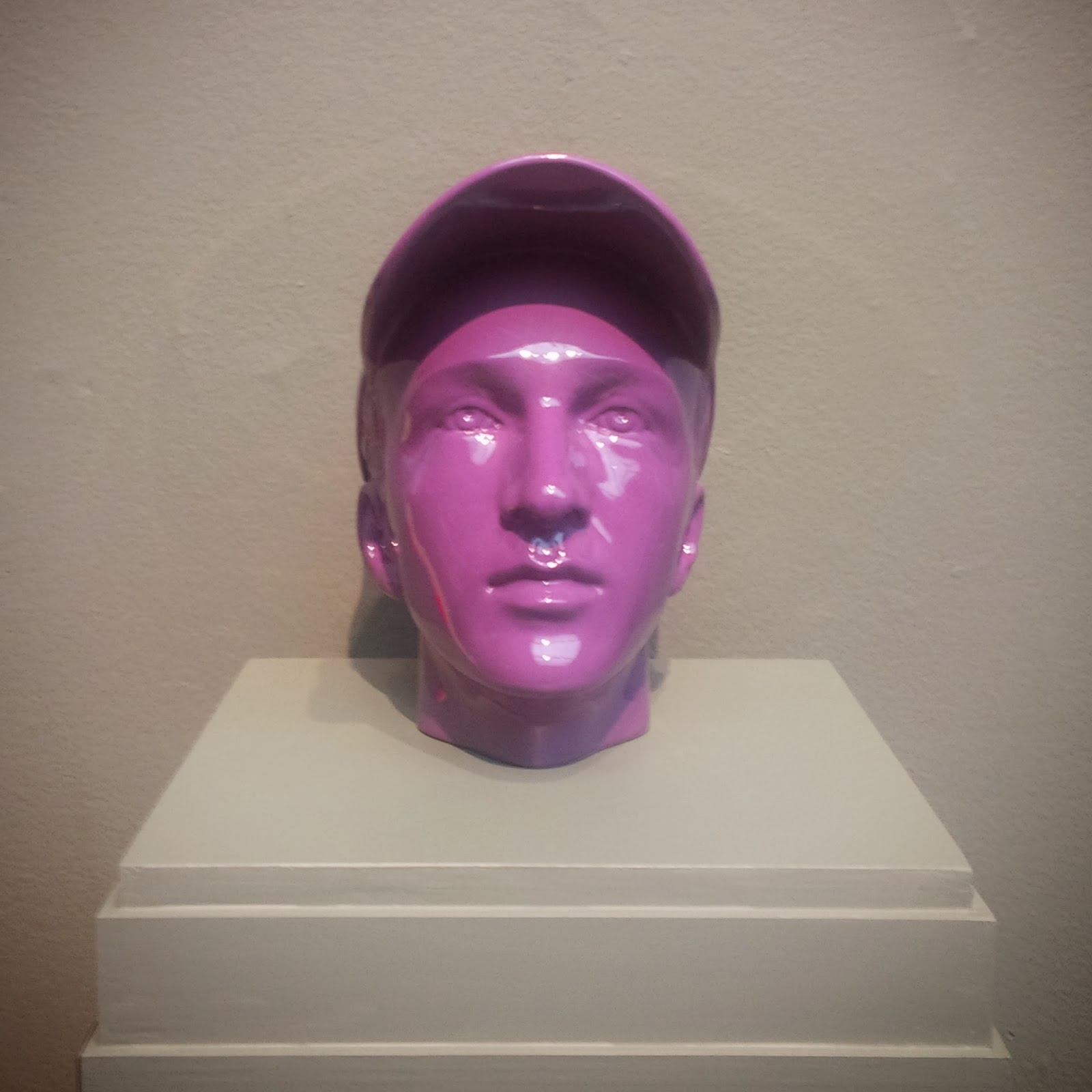
Image of sculpture that will grace entrance
 to PAFA's new pedestrian mall at Cherry Street.
Parkway Turns up a Museum

By Richard Carreno
[Writers Clearinghouse News Service]

Academy of Natural Sciences

1900 Benjamin Franklin Parkway
http://www.ansp.org/
215.299.1000
The academy, founded in 1812, is the oldest natural history museum in the Americas.
Open Monday-Friday, 10 am to 4:30 pm; Weekends, 10 am to 5 pm. Closed Thanksgiving, Christmas day, and New Year's Day.
Admission fee.

Barnes Foundation
Benjamin Franklin Parkway at 20th Street
http://www.barnesfoundation.org/
610.667.0290 (Lower Merion)
The foundation, now located in suburban Lower Merion, Pennsylvania, will move its art collection to a new home on the Benjamin Franklin Parkway in 2011. The museum features the world's largest single collection of Impressionist paintings.
Admission fee.

Franklin Institute
222 North 20th Street
www.fi.edu
215.448.1200
The institute, a science museum, honors Benjamin Franklin, America's first scientist.
Open everyday, 9:30 am to 5 pm. Closed Thanksgiving, Christmas eve, and Christmas day. Admission fee.

Moore College of Art & Design
Benjamin Franklin Parkway at 20th Street
http://www.moore.edu/
215.965.4000
The Galleries at Moore present works by artists from around the world, as well as by alumni.
Open Monday to Friday, 11 am to 7 pm; Saturday, 11 am to 5 pm. Summer hours: Monday to Friday, from 10 am to 5 pm. Closed Sundays and all academic and legal holidays.
Free.

Pennsylvania Academy of the Fine Arts
North Broad Street at Cherry Street
http://www.pafa.org/
215.972.7600
The academy is the country's oldest art museum and art school. Its collection features American paintings, sculptures, and works on paper, ranging from the 18th century through to the 21st century.
Open Tuesday to Saturday, 10 am to 5 pm; Sunday, 11 am to 5 pm. Closed Mondays and legal holidays.
Admission fee.

Philadelphia Museum of Art
Benjamin Franklin Parkway at 26th Street
http://www.philamuseum.org/
215.763.8100
The PMA is an encyclopedic museum, though, based on an informal agreement with the University of Pennsylvania Museum of Archaeology and Anthropology, the museum defers to the Penn Museum regarding extensive collections in archaeology and anthropology. The PMA features more than 225,000 individual artworks in its Main Building and in its satellite, the Perelman Building.
Open Tuesday to Sunday, 10 am to 5 pm; Fridays, to 8:45 pm. Closed Mondays.
Admission fee (Donation requested on first Sundays).

Rodin Museum
Benjamin Franklin Parkway at 22nd Street
http://www.rodinmuseum.org/
215.763.8100
The museum, administered by the Philadelphia Museum of Art, houses the world's largest collection of original casts by Auguste Rodin.
Open Tuesday to Sunday, 10 am to 5 pm. Closed Mondays and legal holidays.
Joint admission fee with PMA. Otherwise donation requested.

University of Pennsylvania Museum of Archaeology and Anthropology
3620 South Street
http://www.penn.museum/
215.898.4001
Though located in University City, the Penn Museum, as it is more commonly known, bookends the collection at the PMA in areas of archaeology and anthropology.
Open Tuesday to Saturday, 10 am to 4:30 pm; Wednesday, 10 am to 8 pm; Sunday, 1 pm to 5 pm. Closed Mondays and legal holidays.
Donation.

For more information: Parkway Museums District via www.parkwaymuseumsdistrict.org.

Tuesday, 17 August 2010

Seniors

Museum Culture Vultures
Squeeze Senior Citizens
By Richard Carreño
[Writers Clearinghouse News Service]
Want to see Picasso's works at the Philadelphia Museum of Art? Or, say, works by Benjamin West and Thomas Eakins at the Pennsylvania Academy of the Fine Arts? Or, simply the grandest collection of French Impressionists anywhere when the Barnes Foundation opens next year on the Benjamin Franklin Parkway.

Even as the economy remains in the tank, Philadelphia's great museums are squeezing their visitors with ever-growing admission fees. Sticker shock isn't just for the car lot anymore.

Not surprisingly, Philly's seniors, many on fixed incomes, are the hardest hit as local museums seek to dig out their respective financial dilemmas (endowments are just growing back to pre-crash values) by socking it big time to one-off visitors.

But are price-gouging fees really helping the museums to turn around? Hardly. Actually, admission revenue only represents for most museums about two to four percent of their total annual income.

Though they are loath to admit it, many museum administrators see high gate fees -- as high as $16 for a one-time visit to the PMA, plus another $25 to include a major show -- as a way to create a wider membership base. If more and more museum-goers are frightened away by outrageous single admissions and ticket fees to blockbuster shows, the logic goes, more of them will be seduced into becoming annual members at seemingly more modest and economic rates. Blockbuster included.

In theory, this Machiavellian maneuvering makes sense. More members increase a wider base for fundraising and hyped-up shopping in over-priced museum stores. Membership also increases an institution's bragging rights to 'loyalty' when it seeks public, corporate, and foundation support, and most important of all, when it turns to the real treasury that keeps a museum afloat, private donations by the rich and famous or, simply, the rich and rich.

As for John Q. Public -- especially John Q. Public senior citizen -- less is said. With museum memberships between the $75 to $100 figure annually, again many seniors here have to take another hit as they seek out the city's patrimony. Or, of course, seniors can avail themselves of discounted pricing, from $16 to $14 (older than 65). Blockbuster not included.

Oddly, this pricing policy runs counter to that at many art institutions from coast to coast -- and in Europe -- that are increasingly understanding that quick hits at the turnstile don't add up to long-range profit, nor, as important, good will. In England, national museums are free. In France, deep discounts are offered to seniors. The same in Israel.

The PMA, when hiking its general admission fee last year from $14 to $16, also, in a particularly Scrooge-like move, reduced its pay-what-wish Sundays, from every Sunday to once a month. PAFA dropped its free Sundays entirely.

Thankfully, three major Philadelphia museums have adhered to free admissions, the Woodmere Museum in Chestnut Hill, the LaSalle University Art Museum, and the University of Pennsylvania Museum. (The Penn Museum recommends a suggested donation. In other words, pay what you want).

These Philly museums, and others around the world, understand that free-will offerings improve the bottom line in non-intuitive ways. More people means more spending in museums stores. At the PMA, more people also means more people parking in its lucratively income-producing parking garage. And lastly, of course, free admissions bring great art to all the people -- despite their incomes.

The PMA, one of the world's great museums, has yet another reason to adopt a free-will offering as its business model -- a legal one. This, especially, since the PMA is often scolded as a habitat for the bourgeoisie, for the haves and the have mores.

The legal issue? We -- the citizens of Philadelphia -- own the building that houses the PMA.

A similar founding charter governs the Metropolitan Museum of Art in New York. Thus, the reason that the Met is free -- well, almost. Pay what you wish, but at least a penny.

The PMA hasn't been held to the Met's example. This, despite millions being poured in to the museum's coffers annually by a half dozen taxpayer-funded agencies.

At the PMA, at least, don't expect any free-will offering anytime soon. True, Timothy Rub, the museum's director, inaugurated a free admission when he served at the Cleveland Museum of Art. But so far, unless you're a member, that will be $16 per visit. Oh yeah, $14 if you're a senior.

Sunday, 1 August 2010

Corrective Surgery


'Gross Clinic' Gets Out of Rehab

By Richard Carreño
Writers Clearinghouse News Service
The Portrait of Dr. Samuel D. Gross, better known as The Gross Clinic and as Thomas Eakins' best known painting, has had a long and arduous journey since the artist created the work in his garret at 1729 Mount Vernon Street, Philadelphia, in 1875. And equally to its perch as the acclaimed finest painting of 19th century America by that century's greatest American artist.

'I have just got a new picture blocked in it & it is very far better than anything I have done,' the Eakins wrote, on April 13, 1875, to the then-prominent critic Earl Shinn.

Until then, of course. At 31, Eakins' appraisal of the Clinic could have been judged premature, considering the body of his work would still span four more decades until the artist's death in 1916 at 72.

Eakins' humanistic The Cruxification was just five years away, and that soulful depiction of Everyman's agony, portrayed by the culmination of Christ's Passion on the Cross, is sometimes thrust forward as the finer painting. Picking nits.

The monumental Clinic, now on majestic display at the Philadelphia Museum of Art, is, by any measure, a singular masterpiece. Eakins created a picture of undeniable, momentous import, capturing -- with the advantage of 21st century hindsight -- a grotesquerie of dark science and the imperiousness of medicine. This at a time in the late 19th century when physicians, in America, at least, were being first put on their legendary 'pedestal' that would only topple 100 years later. If Clinic were a moving picture, it would be 'film noir.'

I first saw the painting -- in my reverence for the work, my viewing was more like an 'audience' -- when it was ensconced at a former hideaway at Thomas Jefferson University, in a free walk-in gallery that was rarely visited and, even more sadly, little known. (The painting itself was a commissioned work. Gross was at the time Jefferson Medical College's 'star' surgeon, and the work was a PR gambit on his and the institution's behalf. If Philadelphia Magazine had been around in those days, Gross would have been billed as a Philly 'best.')

In 135 years, Clinic has seen halcyon days. Even before its paint was dry, it was the artisic centrepiece at the Phladelphia-based 1876 United States Centennial, glorifying the art of medicine. As a much aging debutante, it got a second 'coming out' to great applause at the Metropolitan Museum of Art in an Eakins memorial show in 1917. In 2001, it became the crown in the jewel in a 'blockbuster' retrospective at the Philadelphia Museum, later moving to Paris for even more fanfare.

After that, a silent repose fell upon the picture until 2007, when Jefferson, in a back-room fund-raising scheme, dramatically agreed to sell the painting for $68-million to a joint ownership cavil of a Wal-Mart heiress and the National Gallery. That skull-duggery -- whether it was a set-up, or not will probably never be known -- led a local drive to 'save' the picture for Philadelphia.

Thanks to late Anne d'Harnoncourt, at the time the whirlwind director of the Philadelphia Museum, who spearheaded the drive, $68-million in local and worldwide donations kept the painting at home. 'Home' being a joint custodial agreement by the PMA and the Pennsylvania Academy of the Fine Arts.

Ironically, the painting that the PMA and PAFA purchased was not the picture that Eakins created.

No, not fraud.But simply good intentions.

As is routine, all museum holdings are subject to cleaning and conservation, and the Clinic's last turn at getting a re-do, at the PMA, was about 90 years before. Intuitively, the PMA conservators sought to lighten the painting's dark hues. But, unbeknownst to them, 'brightening' the picture ran counter to the intended chiaroscuro that Eakins endowed the work.

This was not a happy place, Eakins tells us in depicting the operating theatre, seen with today's eyes as a macabre house of horrors. Even the patient's mother, cruelly invited to attend the surgery, for legal reasons that prevailed at the time, must shield her eyes from the hideous spectacle, overseen by the professorial and dispassionate Dr. Gross. (Is his height -- he's centred as the tallest individual in the painting -- elevated by an unseen pedestal?, one wonders).

Eakins, no Pollyanna, understood life's darker side. Though the picture putatively evinced Gross as the master surgeon, at the top of his game, Eakins didn't blind himself to bloody spectacle. Step forward, thanks to Eakins, a new school of American Realism.

Beginning in 2001, PMA conservators also started to understand how light figured in Eakins' paintings, concluding, contrary to previous interpretations, that darker shades and shadows were meant to be in his work. (A rethink of Between Rounds [1898-99] settled the matter).

And the Clinic?

Mark S. Tucker, the museum's vice chair of conservation, was tasked with the re-habbing. Not surprisingly, given the findings from the previously-conserved works, it was discovered, following X-rays and paint analysis, that Clinic had also been illuminated in a 1920s cleaning.

Tucker and his staff re-tinted the painting, and, despite the well-known findings from the previous restorations, the PMA presented this latest re-do as a modern marvel of investigative science and forensic technology. (With PR spin in full throttle, breathless articles of new discovery found their way to The Philadelphia Inquirer and The New York Times).

Regardless of that hype, what has resulted is a Clinic that surpasses all its previous 20th century showings. Its presentation, in conception, stagecraft, and execution, is a tour de force. With in-door gallery lighting just so, refreshed pigments glisten, twinkling in pools of reflected light. The picture is, in fact, so enhanced that the viewer can't escape an almost-slide show narrative that darts from Gross, mother, patient, scribe, surgical instruments.

The PMA has been modest in titling this latest coming-out of Eakins' grande dame as 'Seeing The Gross Clinic Anew.' Thanks to Tucker and his crew, it's more like a rebirth.

The exhibition, in the PMA's Perelman Building, runs until January 9, when it moves to PAFA.

Wednesday, 14 July 2010

Museum Mile

Museum Mile Gets
The Gross Clinic
Extended to City Hall
By Richard Carreno
Junto Senior Staff Writer Bio 

City Hall Joins Museum Mile
Add City Hall to new gallery space along Museum Mile.


Mayor Michael Nutter has unveiled 'The Art Gallery at City Hall' in a renovated 800-square-foot space (Room 116) that CH officials call 'environmentally friendly' and part of an effort 'to promote the city's rich artistic and cultural heritage.'

The ongoing inaugural exhibit is titled 'On the Rise' and features 'emerging' artists from three non-profit arts groups, the Center for Emerging Visual Artists, Inliquid, and Philadelphia Sculptors.

The gallery is open from 10 am to 4 pm Mondays to Fridays.


The Doctor is In
The Gross Clinic (1875), arguably America's greatest 19th century painting, painted by arguably America's great 19th century painter, Thomas Eakins (1844-1916), has gotten a new lease on life thanks to a new restoration by the Philadelphia Museum of Art.

The results of that do-over, in all its glory, will be highlighted when the picture goes on display from July 24 to January 9 in the museum's satellite, the Perelman Building.

The painting will be displayed along with another large-scale portrait of an operation scene, The Agnew Clinic (1889). The well-known Gross Clinic is jointly owned by the PMA and Pennsylvania Academy of the Fine Arts (PAFA). The Agnew Clinic, though lesser known, is another dramatic -- and, for its time, controversial -- picture. The painting, depicting a mascetemy being performed on a young woman, is on permanent loan to the PMA by its owner, the University of Pennsylvania.

Conservation was directed by curator Mark S. Tucker.


Starr chamber
The PMA will get the 'Starr treatment' when Stephen Starr, the culinary impressario, takes over the museum's cafe and restaurant next month. He'll also operate the cafe in the Perelman Building.

About time.

All of the museum's feeding and watering areas and catering services have been under contract for past 16 years to Restaurant Associates, a New York outfit that has treated food service at the PMA with little or no culinary imagination and derring-do. Think automat.

Enter the Starr-man. Whether Starr deserves one to five stars for his other 13 local foodie enterprises (the Parc, on Rittenhouse Square is one of my favourites) is best left up to the critics. But no one can fault him for lacking inspired themes and creative prop-driven environments. (The Parc looks like it was moved hook, line, and baguette from Boule Mich). Expect high-style artsy.

A Brush Job
Museum Mile's gateway at PAFA, in what will be the new Lenfest Plaza between the the museum's Frank Furness-designed main building and its satellite Hamilton Building, will be Broad-brushed. Angled precariously at a 60-degree angle over Broad Street, a 53-foot high sculpture of a paintbrush will be featured.

The sculpture, to be done by Claes Oldenburg, will be an instant public art icon, as Oldenburg's Clothespin, installed in 1976, has become. Similarly, his Split Button, at the Penn's University City campus, has become a campus centre-piece. And Robert Indiana's Love sculpture that transformed a less-than-lovely Centre City rock pile into Love Park.

I like the sculpture's whimsy, as well. A dollop of 'paint' will will be on the ground below the brush.

Bravo PMA!

No financials were announced by the museum.

Friday, 4 June 2010

Museum Mile: Another museum to grace the Franklin Parkway? (No, not the Barnes Foundation)

PAFA's Lenfest Plaza Under Way

By Richard Carreño
Junto Senior Staff Writer Bio
With the Philadelphia Museum of Art as its capstone, the Benjamin Franklin Parkway is increasingly living up to its reputation as Philadelphia's 'Museum Mile.' This, especially, since the Pennsylvania Academy of the Fine Arts is finalizing plans to connect its Lenfast Plaza to the base of the 'Mile' at Broad Street.

The plaza is named for Gerry Lenfest, a PMA trustee and a former board chair, and his wife, Marguerite Lenfest, and will encompass space made available from the closing of Cherry Street, from Broad to 15th Street. PAFA's plan envisons the plaza as being Museum's Mile anchor, or its Center City 'gateway.'

The plaza is sited across from the new Broad Street entrance to the expanded Pennsylvania Convention Center, and and is likely to act as a funnel to the Mile from new foot traffic in the area. PAFA estimates that about 1.5 million visitors will annually attend center events.

As important, the plaza eliminates a traffic artery dividing the PAFA 'campus' from its iconic Frank Furness main building and its Hamilton Building satellite, just north of Cherry Street. This also deep sixes a plan, floated a few years ago, that would have constructed a tunnel to connect the two buildings. That idea was highly unpopular in that it would have meant altering the pristine interior of treasured Furness building.

Meanwhile, PAFA has created a task force to determine best uses for the plaza. Memo to David R. Brigham, the academy's president and CEO: For starters, an alfresco cafe, book stalls, outdoor art shows and sales, and live video streaming the museum's brilliant collection.

Civil War Museum to the Parkway?
Oliver St. Clair Franklin might be on to something. Frankin, who's best known around town as Britain's chief local ribbon cutter (he's the UK's honorary consul), has suggested that the Family Court Building at Logan Square and Vine be converted to house the city's now-nomadic Civil War collection. Turns out that Franklin is also the board chairman of the Civil War Museum. Who knew?

Franklin's proposal comes gift-wrapped in a big 'if.' Still, the notion -- the museum, part, at least, has been floated by others, as well -- is well worth exploring. With certain caveats.

While the relocation is a good idea, it comes attached lots of strings.

The biggest is the actually vacancy date of the fabulous Beaux Art-styled building, fashioned after the Crillon on the Place de la Concorde. Thanks to Ronald D. Castille, the state's chief justice, that timing is now problematic. Construction of new Family Court building was scheduled to get under way next month at a parking lot site across from Love Park. But, as recent news reports have noted, Castille screwed up that time-table royally with his mis-handling of the millions that were earmarked for construction. Enter a well-connected, double-dealing Philly lawyer, and, well, it's another all-too-familiar story of public corruption, ineptitude, and greed.

So even when the Vine Street building is free to be repurposed, there's also that other quite familiar scenario emerging: sniffling whinging by but-in-ski nay-sayers. In this one-act play, more suitable for a one-horse town than the nation's sixth largest city (village?), step forward John Andrew Gallery, the executive director of Preservation Alliance of Greater Philadelphia. Gallery has coughed up a half-dozen rinky-dink objections to Franklin's plan. These piddling bits could have been better settled over a cold Stella than by picking a fight in an Inquirer letter. (31 May).

Still, the museum plan needs refinement. The Family Court building is a monumental city-block behemoth, and thus cries out for commercial mixed use. Franklin's putative sole-used concept can't fly. The collection is too small. Moreover, for the collection to move to a new home -- any new home -- it needs to be curated and refurbished. Sadly, the museum simply went 'bankrupt' at its former home on Spruce Street, and the collection itself suffered.

Others have proposed a hotel occupant. Good idea. Other good ones: Retail, including a branch of the PMA's gift shop. 'Floating' gallery exhibits from neighboring museums and cultural institutions. (These include, by the way, the Gallery at the Moore Gallery of Art, the Academy of Natural Sciences, the Franklin Institute, the main branch of the Free Library, and new Barnes Foundation. In other words, it's a hard-core cultural hood). Add book shops. A requisite cafe.

And, lastly, the removal of the bums who, who simply by dint of their presence, litter Logan Square.

Hello, this is a vision thing. Something that Philly movers and shakers aren't too good at, alas.

RIP: Robert McNeil Jr., 94
Robert Lincoln McNeil Jr, 94, a chemist, head of the company that created the well-known pain-killer Tylenol, and a major donor and patron of the Philadelphia Museum of Art died 20 May at his home in suburban Wyndmoor. Donations in his memory may be made to the PMA's Center for American Art, or to the Community Partnership School, Philadelphia.

Wednesday, 5 May 2010

Get in Cheaper

PMA and PAFA Offer
Senior Admission Discounts


Stamatina Gregory, right (See below)
By Richard Carreno
Junto Staff Writer Bio
The Philadelphia Museum of Art and the Pennsylvania Academy of the Fine Arts are among scores of Philaelphia cultural organizations that are offering discounted admissions as part of city-sponsored 'Celebrate Arts and Aging' initiative for senior citizens.

The Phiadelphia Museum's discount applies to the upcoming 'Late Renoir' exhibit, to be held from June 17 to September 6. Instead of a $24 admission fee, the senior charge for those 65 or older will be $18.

At PAFA, the discount applies to its regular admission fee, reducing it from $10 to $5 for seniors 60 years or older. The discount will apply through May.

In both cases, the discount is coded ENGAGE 10, and this promotional reference needs to be mentioned.

ART NOTES
Curator Will Speak at Temple's Tyler School of Art
In conjunction with the Tyler School of Art MFA 2010 Thesis Exhibitions, guest lecturer Stamatina Gregory, an independent curator and critic based in New York, will speak about her curatorial work Thursday, May 6, at Lower Level South B004, at the Tyler School of Art at Temple University. The lecture begins at 6 pm and is free and open to the public.

New Book on Philadelphia Museum
Look for my book on the Philadelphia Museum of Art, scheduled for publication in January 2011 by WritersClearinghousePress.

Some of content will be drawn from my reports for Examiner.com and The Philadelphia Junto. Other original work will also be part of the book. Its working title is Legacy and Future: The First Hundred Years of the Philadelphia Museum of Art.

Thursday, 29 April 2010

Museum Round-up

Gross Clinic Gets
Out of Rehab
By Richard Carreno
Junto Staff Writer Bio 
Right, 'Girl with Red Ruff' (1896)
by Pierre-Auguste Renoir
The Gross Clinic, Thomas Eakins' masterwork, will be remounted  in July at the Philadelphia Museum of Art following recent conservation and restoration of the painting, often acclaimed as one of the most significant artworks of the 19th-century.

The painting, completed in 1875 sold by Eakins (1844-1916) to Thomas Jefferson University (then Tomas Jefferson Medical College), is now jointly owned by the Art Museum and the Pennsylvania Academy of the Fine Arts after a controversial purchase from the university in 2006.

The specialty exhibit, from July 24 to January 9, 2011 in the Perelman Building, will explore the painting's history, itself controversial. Initial reaction to the painting ranged from 'horror and revulsion to awe-struck praise,' according to the museum.

The show will be comprehensive, including x-rays of the picture and documentary film produced by the museum.

The museum noted that preservation was particularly required because of 'an insensitive 1920s cleaning.'

'As a result of research and conservation work, audiences will be able to see this masterpiece looking more as it did in Eakins's day than it has at any time since the early 1920s,' the museum said in e-mailed press notes.

Curating the exhibit are Mark S. Tucker, vice chair of conservation and senior conservator of paintings; and Kathleen A. Foster, senior curator of American art and the director of the Center for American Art. The documentary was filmed by Suzanne Penn, conservator of paintings.

SUMMER WITH RENIOR
Works from the last three decades of Pierre-Auguste Renior's career, drawn from private and public collections from around the the world, will be the PMA's main stage exhibit this summer.

The show, titled 'Late Renoir' and now at the Los Angeles County Museum of Art, will run from June 17 to September 6 in the Dorrance Galleries.

About 80 works by the Renoir (1842-1919) will be displayed, including sculpture and drawings. The museum did not mention whether any works from the Barnes Foundation, a rich repository of the artist's output, will be exhibited. A fully-illustrated catalog will be available.

'...Late Renoir examines new directions that the artist explored several decades after he and others such as Claude Monet and Camille Pissaro created the new style of painting known as Impressionism,' the museum said in press notes.

As is the case with most PMA exhibits, the narrative of the artwork will be chronological.

The show's curator is Jennifer Thompson, associate curator, European painting before 1900.

Museums Around Town

At the Institute of Contemporary Art
'Queer Voice,' an exhibit of works by nine artists across three generations, including Philly-based Ryan Trecartin, will run through August 1 at Penn's Institute of Contemporary Art on the university's campus at 36th Street.

Admission to the museum is always free.

Included is Trecartin's video, P.opular S.ky (section ish) (2009) and the script for K-Corea INC. K (Section A) (2009).

Trecartin, a native Texan, was born in 1981 and studied at the Rhode Island School of Design, Providence. In 2009, Trecartin won the Jack Wolgin International Competition in Fine Arts and was named the 'Best New Artist of the Year' in the first Annual Arts Awards at the Guggenheim Museum.

At the Please Touch Museum
Please Touch Museum, the Children's Museum of Philadelphia, located in Memorial Hall, will sponsor the 10th annual ABC Games, a near month-long series of sport and physical activities to encourage youth fitness, sportsmanship, an self-confidence.

The event's kick-off will be Friday, June 4 and run to June 27. Activities will be held at the museum's Rainforest Rhythm Gallery, next to the Woodside Park Dentzel Carousel.

Thursday, 25 February 2010

PAFA

Landscape Architect Selected
for PAFA's Lenfest Plaza

With City Council having passed legislation approving the closure of Cherry Street between North Broad and Carlisle Streets, the Pennsylvania Academy of the Fine Arts (PAFA) has selected the internationally renowned landscape architecture firm OLIN to design the public plaza that will be developed immediately on that site.

Named Lenfest Plaza in recognition of the $2-million pledged in 2003 by H.F. Gerry Lenfest and his wife, Marguerite, who is on PAFA's Board of Trustees, PAFA will unveil its plaza in the spring of 2011, which coincides with the opening of the newly expanded Pennsylvania Convention Center.

Unifying PAFA's campus, the pedestrian court will stand between the Academy's Historic Landmark and Samuel M.V. Hamilton Buildings. With the Convention Center to host 1.5 million visitors annually after its expansion, PAFA will serve as a cultural gateway for the city and the starting point of Philadelphia's celebrated Museum Mile.

"Connecting the two buildings with an attractive and functional plaza is a great idea that will now happen," said Lenfest. "The Academy has a long tradition and ongoing excellence in the art world. The Plaza will make it more visible to both Philadelphians and visitors. Gerry and I are pleased to take part in this."

Open to the public 24-hours a day, PAFA's Lenfest Plaza will offer outdoor seating in an urbane setting. An upscale restaurant will look out onto the plaza from the ground level of the Hamilton Building. A major work of art is being commissioned by a renowned sculptor and rotating works of emerging and established artists will be continually on display, making this an exciting and inviting civic space.

OLIN, recipient of the 2008 Cooper-Hewitt National Design Award, is internationally recognized for design excellence in landscape architecture, urban design, and planning. Their award-winning projects range in scale from master plans for entire urban districts, to the design of public parks and plazas, to intimate garden spaces and residences.

 Projects and clients include the sculpture garden at the National Gallery of Art in Washington; the Art Institute of Chicago; the J. Paul Getty Trust; the Museum of Modern Art; the Los Angeles County Museum of Art; and New York City Parks and Recreation. In Philadelphia, OLIN's clients include the Philadelphia Museum of Art, Comcast, and the Barnes Foundation.