Celebrating ....

CELEBRATING The PJ's 50th YEAR! * www.junto.blogspot.com * Dr Franklin's Diary * Home of the Philly Cheapskate*Contact @ WritersClearinghouse@yahoo.com * Join WritersClearinghouse at Facebook, Instagram, etc. *Meeting @ Philadelphia * Empowered by WritersClearinghouse.
Showing posts with label Authors. Show all posts

Monday, 3 October 2016

Books Received

Liberace's Filipino Cousin
By David R. Brubaker
ThingsAsian Press, 2016
$12.95 

David Brubaker knows and loves this corner of the world [the Philippines], and his passion for it is infectious. History, humor, and travel tips are brought together in his tantalizing glimpses oi this country of 7,000 islands and the delightful people who live there. As you read and laugh through pages, you'll be learning how to navigate your way through the crazy streets of Manila, how to travel country roads to meet an island witch who uses her powers to heal, how to join one of the most exclusive clubs on earth, and above all, how to enjoy your time in a country that is still off the beaten track for many travelers. -- From the cover

Thursday, 12 March 2015

Janet Flanner

THE NEW YORKER'S FLÂNEUSE
By RICHARD CARREÑO
Flanner
Hotel Intercontinental
PARIS [WC News Service] -- For more than thirty years, The New Yorker, arguably America's most respected middle-brow general circulation magazine, surveyed this city and French life from a 12 feet by 15 feet perch overlooking the Palais Garnier, the wonderful Beaux Arts structure that houses the Paris Opera.
 
That is, until 1978, when 86-year-old Janet Flanner, the magazine's Paris correspondent known by her sobriquet 'Genêt,' who had occupied the pocket-sized room, suffered a fatal heart attack during one of her periodic visits to New York. It was, as they say, an end of an era.

Wednesday, 6 August 2014

City Lights Bookstore

MInD THe_Gap
By Richard Carreño
[WritersClearinghouse News Service] Posted 7 August 2014
San Francisco
San Francisco is well known for many things: Steve McQueen's blistering car chase in Bullitt. For the Golden Gate Bridge, Alcatraz, and huffing and puffing up (and down) Telegraph Hill. Its user-friendly public transportation system (refurbished, retired trolleys and, of course, its hokey cable cars). An odd comestible known as Rice-A-Roni (and its catchy 'San Francisco Treat' ad jingle). Levis are of course synonymous with the city, and so are the 49ers who wore them. And who can forget the still wet-behind the ears Michael Douglas debuting in the TV series The Streets of San Francisco? 
 
But I knew I was in for a different kind of 'treat' as I settled in with my cabin mates for my flight from Philly to SFO. The surrounding businessmen were clearly representatives of a new, evolving San Francisco, and one I hadn't known before. And my last visit was only five years ago. Sporting iPads, iPhones, laptops, ear-plugs, and headsets, these New-Age 49ers where hardly Rice-A-Roni types. My heavily-wired companions, of course, were newly-minted Silicon Valley standard-bearers, and I doubt they were iTuned to Tony Bennett waxing lyrical about leaving his heart in the 'City by the Bay.'

Welcome to San Francisco's corporate world of Google, PayPal, and Facebook -- and generic billion-dollar 'Googlers' from Instagram, Yelp, HubPages, Dropbox, Pinterest, Twitter, and dozens of other Internet sensations. If there were any Levis in sight, they were skinny jean versions, matched with shortie jackets, skinny ties, rectangular-shaped eyeglass frames, and other accouterments pinched from the pages of a recent J. Crew catalogue. Or, rather, this being San Francisco, Gap Inc and Banana Republic, also headquartered here.

My return involved a more old-fashioned mission. Armed with a copy of Long Ago in France by M.F.K. Fisher (my non-electronic form of entertainment), I came to visit a Bay bookshop -- and buy a book. Not any bookshop. Nor any book.

Saturday, 10 May 2014

A Hidcote Midsummer Mystery By Alasdair Douglas Reid

A HIDCOTE MIDSUMMER MYSTERY
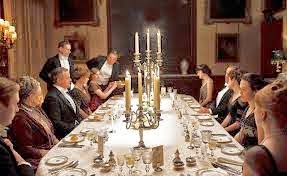
In this excerpt, the author, English writer Alasdair Douglas Reid, introduces us to his new soon-to-be-published mystery novel,  which The PJ believes is destined to be a run-away best-seller. Think Agatha Christie knocking off a few of the Downton Abbey crowd.  In the mix are a few historical figures such as, for one, that mid-20th century 'mystery man,' Henry "Chips" Channon, none other than pre-War Society's 'Lord of Hosts.' Sit back and enjoy.

 
By ALASDAIR DOUGLAS REID
Friday, 26 June, 1936. A sultry evening in late June is, Classen had been told, the very best time to make Hidcote’s acquaintance. Towards sundown in high summer, in the heart of England , the deepest, darkest heart of England , Hidcote begins drawing the day around itself – manor house, garden, hamlet and tree-lined lane, tight in the fields and the woodlands beyond.
            And this was, indeed, a sultry evening in late June.
            But as he dressed for dinner, Classen felt no inner glow. He felt, in point of fact, uninspired. He wasn’t chafing at the ill-defined nature of his mission. Not entirely, at any rate. He didn’t, in the normal course of events, mind being roped into these sorts of things. There were no other places he was meant to be. He had no other plans.
            Nor did he much mind the fact that he had been given this Spartan little room up under the eaves.
            And yet. If summer is the silence that follows spring, he could feel it all around, he could sense its most profound depths. His reflection in the blistered silver of the mirror they had given him was clouded and ghost-like.
            Downstairs, as he crossed the hall, the air seemed stale, the light uncertain. A stuffed owl stared out at him from a glass case. And he too almost succumbed to gloomy thoughts.
            But then the double doors facing him were thrown open. And he smiled, almost despite himself. The lights were not yet lit; but there was a vividness about the room within. It was all somehow as it ought to be. And it was as if he had stood here a hundred times before. Here they all were: Norah Lindsay and her daughter, Nancy; the polo star Jamie Waterbury; Country Life magazine writer Dorothy Moore; Henry Channon; Mr and Mrs Muir from neighbouring Kiftsgate Court; and, of course, Major Johnston and his assistant, Miss Marsden. Mrs Merrill, too. She was, as promised, on hand to introduce Nicholas Classen to the drawing room for drinks before dinner.

Wednesday, 16 April 2014

Encounter with O'Hara

 What's it like to encounter the author John O'Hara and arguably his finest book, Appointment in Samarra, for the first time? Ray Chellel, who retired as British 'public' school teacher in classical literature several years ago, had just that encounter. Chellel was born in Barrington, Rhode Island, graduated from New York University, and sped soon after in the 1960s to London. He's been in the UK ever since, now living in Kent. He remembers Barrington, at the time a 'dry' town, as something like a Gibbsville. 'Booze was banned, but everybody drank like fish.' He recently sent this appraisal to The PJ.

Four-Wheel Appeal
Samarra really is a tour de force, and hard to believe that it was his first novel. I love the clear, sharp prose, and the microcosmic snapshot of 1930 America which Gibbsville, with its snobbery, racism, sexual predation, hypocrisy, and its pervasive criminality that was intensified, if not created, by Prohibition.
 
Gibbsville is certainly not 'Our Town.' The book reminds a little (but only a little) of Fitzgerald. But much more cynical, without FSF's lyricism or stubborn belief in the luminous beauty and just-out-reach possibilities represented by the Green Light at the end of Daisy's dock. From my scant knowledge of American literature, maybe Richard Yates' Revolutionary Road is a better comparison -- although he is commenting on the 1950s. 

Monday, 7 April 2014

Lord of Hosts: The Life of Sir Henry Channon


Hardback edition from WCPress available at amazon.com for $24.99, or at philabooksbooksellers.blogspot.com for 20 percent off. Contact philabooks@yahoo.com for details.

The PJ depends exclusively on reader support. Please help us continue by contributing directly via PayPal, or by contributing editorial content via PhiladelphiaJunto@ymail.com. Empowered by Writers Clearinghouse | S.P.Q.R. 1976 Richard Carreño, Editor Copyright MMXIV. All Rights Reserved

Thursday, 27 February 2014

Jerry Lewis Move Over

Patricia MacDonald
Photo: Jackie Atkins/WritersClearinghouse News Service
FRANCE'S 'MYSTERY QUEEN'
BY JACKIE ATKINS
[WITERSCLEARINGHOUSE NEWS SERVICE/BIO]
Cape May, New Jersey
From noon to five, every day except Sundays and on holidays, mystery writer Patricia MacDonald works at her day job, writing a new novel once a year for the enjoyment of discerning Americans and the edification of her agent. And the French. They love her best-selling who-done-its in France. Who knew? 
 
She has never experienced what some have dubbed 'writers block.'
 
'To be truthful with you,' she tells me over a cup of coffee in her brightly-lit breakfast room in her 19th-century house here, full of antiques, knick knacks, and bookcases of French cookbooks, 'whenever someone mentions this term [writer's block], I have no know idea what they are talking about.'
 

Wednesday, 29 January 2014

John O'Hara Remembered


'Oh yeah, let's take this outside.'
 Norman Mailer almost killed one of his wives. John O'Hara, when besotted by drink, was no gentleman. But in today's lit'ry circles, Mailer often gets a pass. O'Hara never does. Get to meet 'the Master of the Fancied Slight,' as O'Hara was known, in the following brilliant new dissection of the author's life by Charles F. McElwee III.  

 TOUCHY, TOUCHY
BY CHARLES F. McELWEE III
[SPECIAL TO WITERSCLEARINGHOUSE NEWS SERVICE]
John O'Hara wanted acceptance, but acceptance required penance. The author's acerbic, self-destructive personality limited the accolades and tributes he demanded. O'Hara had too many enemies, and he added many in his exhausting life. An Olympian grudge holder, O'Hara routinely blacklisted friends for no particular reason.
 
He was a brawler, a boozer and a blowhard - the holy trinity of a jerk. Bars were O'Hara's boxing rings, and he slugged and rumbled at negligible or imagined provocations. He threw fists at a dwarf in New York's "21" Club, only to be knocked down by another dwarf who joined the fight. He even smacked a woman for a tardy lunch arrival. The high society O'Hara craved loathed him for his alcohol-soaked brutality. Everyone knew him as "a master of the fancied slight." 
 

Friday, 25 October 2013

20 Percent Off! -- Advert

LORD OF HOSTS: THE LIFE SIR HENRY 'CHIPS' CHANNON
By Richard Carreño
$24.99
WCPress
Available at discount only via philabooksbooksellers.blogspot.com
 

Friday, 11 October 2013

PHL Lit'ry Salon

PHL Exhibit 'Philadelphia's Literary Legacy'
Photo: Richard Carreño/WritersClearinghouse News Service
 
WHO'S MISSING?

BY RICHARD CARRENO
[WRITERSCLEARINGHOUSE NEWS SERVICE]

What do Rosella Brown, Teri Woods, Gardner Dozois, Lorene Cary, and Ben Bova have in common? Yeah, I know, you probably never heard of these authors, all with Philadelphia and Pennsylvania regional connections. Millions of passengers passing through Philadelphia International Airport are also scratching their heads. Yet they're among twenty-five Philadelphia-related authors, poets, and playwrights that PHL officials (you know, that lit'ry smart set) have designated as representing 'Philadelphia's Literary Legacy' in an exhibit recently mounted between Terminal A East and the old B connector. Nice try, PHL! And in 'partnership' with the Philadelphia Free Library, no less.
 
In fact, many of the Philly authors celebrated in the exhibited have a dubious claim to fame. Some are minor writers; some, niche writers; some, no-name writers. Half are women, and 'one' is actually a team, the well-known children's authors 'The Berenstain's' Yes, they actually spelled it that way!
 

Tuesday, 8 October 2013

On Paper (Advertisement)


Paperweight:
A History of Paper

PJ Book Editor Jackie Atkins will review On Paper next month, as well as interview the author, Nick Basbanes.

List Price: $35.00
A consideration of all things paper—its invention that revolutionized human civilization; its thousand-fold uses (and misuses), proliferation, and sweeping influence on society; its makers, shapers, collectors, and pulpers—written by the admired cultural historian and author of the trilogy on all things book-related: A Gentle Madness; Patience and Fortitude (“How could any intelligent, literate person not just love this book?”—Simon Winchester); and A Splendor of Letters (“Elegant, wry, and humane”—André Bernard, New York Observer).

Nicholas Basbanes writes about paper, from its invention in China two thousand years ago to its ideal means, recording the thoughts of Islamic scholars and mathematicians that made the Middle East a center of intellectual energy; from Europe, by way of Spain in the twelfth century and Italy in the thirteenth at the time of the Renaissance, to North America and the rest of the inhabited world.

Thursday, 3 October 2013

Old John O'Hara Haunt

Pottsville Club Says Adieu to O'Hara Memories
BANK BLACKBALLS CLUB
BY STEPHEN J. PYTAK
[STAFF WRITER/POTTSVILLE REPUBLICAN HERALD]
POTTSVILLE, PENNSYLVANIA
If author John O'Hara were alive today, he might be disheartened to hear the Pottsville Club is slated to close, according to one of the fans of his fiction, Mantura M. Gallagher, Pottsville.
"John O'Hara, I believe, would be sad to see what impact the demise of such a long-standing institution as the Pottsville Club might have on his Gibbsville. O'Hara was a member of the Pottsville Club and enjoyed being part of the upper crust of Pottsville society until his father, Dr. O'Hara, passed away," Gallagher, former Schuylkill County commissioners chairperson, said Monday.
But O'Hara, who was critical of social classes and institutions, may have had something else to say about changing times and the closing of a club he alluded to in his novels.
Vincent D. Balitas, Pottsville, who started "The O'Hara Journal," a literary magazine published locally between 1978 and 1982, did not want to speculate on O'Hara's views when called for comment Wednesday.
"O'Hara's dead," Balitas said before hanging up the phone.

Saturday, 3 August 2013

Goldleaf on O'Hara


NEW YORK STORIES
The following is Part II of Robert Knott's interview with John O'Hara Society member Steven Goldleaf, editor of the upcoming volume of O'Hara's New York Stories.
 
Robert Knott: What were some of the challenges the editing process entailed?
Steven Goldleaf: During the editing I realized that I was having arguments with John O’Hara.  I could sense his presence when I would decide, for example, to make something uniform throughout the stories.  Some of these were very small things, like the spelling of “grey”—with an “e” or an “a.”  He had it both ways.  I thought it would be nice to have it consistent, but I imagined O’Hara’s objection: “No, that has to be spelled in the British way because….”
 
I’m not crazy enough to literally have this argument with a dead person, but in my head I thought: “Yes, sir, but for consistency….”  And sometimes they were rather substantial issues.  You think of editing as being rather easy, just select some stories, put them in order and publish them, but there were some issues that were tricky.  Did I mention the story “Sportsmanship?”

Friday, 5 July 2013

Two Philadelphians Cited


Philadelphia architect Laurie Olin
Obama to Award 2012 National Medal of Arts and National Humanities Medal

On Wednesday, July 10, 2013 President Obama will award the 2012 National Medal of Arts and National Humanities Medal in the East Room of the White House.  The First Lady will also attend.  Further details will be released closer to the event.

The National Endowment for the Arts was established by the Congress in 1965 as an independent agency of the Federal Government. To date, the NEA has awarded more than $4 billion to support artistic excellence, creativity, and innovation for the benefit of individuals and communities. The NEA extends its work through partnerships with State arts agencies, local leaders, other Federal agencies, and the philanthropic sector. The National Endowment for the Humanities was created in 1965 as an independent Federal agency, the National Endowment for the Humanities supports research and learning in history, literature, philosophy, and other areas of the humanities by funding selected, peer-reviewed proposals from around the Nation. The Endowment brings high-quality historical and cultural experiences to large and diverse audiences in all states, the District of Columbia, and five territories.

Wednesday, 27 March 2013

Jackie Atkins meanders

through Richard Carreño's life as a flâneur and never gets tired of the journey.
By Jackie S. Atkins
[Writers Clearinghouse News Service]
HOW does one read a third-person narrative of a first person memoir? Well, on a bus, in a cab, by the fireplace, in bed (either silently or aloud to a favorite friend). All of these will work, for that matter how about while standing upside down and glancing into a mirror? Such is the fate of rapture and bemusement which will befall the reader of Richard Carreño’s A Flâneur at Large: Cultured Shock (WritersClearinghousePress, 198 pp, $14.99).

Monday, 5 November 2012

Books Reviewed

Northern Liberties
Harry Kyrakodis
The History Press
October 2012
192 pp
$21.99

Since the time of William Penn, the Philadelphia neighborhood of Northern Liberties has had a tradition of hard work and innovation. This former Leni-Lenape territory became one of the industrial River Wards of North Philadelphia after being annexed by the city in 1854. The district’s mills and factories were powered not just by the Delaware River and its tributaries but also by immigrants from across Europe and the city’s largest community of free African Americans. The Liberties’ diverse narrative, however, was marred by political and social problems, such as the anti-Irish Nativist Riots of 1844. Local historian Harry Kyriakodis traces over three hundred years of the district’s evolution, from its rise as a premier manufacturing precinct to the destruction of much of the original cityscape in the 1960s and its subsequent rebirth as an eclectic and vibrant urban neighborhood. In this first history of Northern Liberties, Kyriakodis unearths the story of this remarkable riverside community.

The J U N T O depends exclusively on reader support. Please help us continue by contributing directly via PayPal, or by contributing editorial content via WritersClearinghouse@yahoo.com. Empowered by Writers Clearinghouse | S.P.Q.R. 1976 Richard Carreño, Editor

Tuesday, 31 July 2012

Worcester, Massachusetts, July 2012

Former boyhood house (above) at 31 Providence Street of the late dramatist S.J. Behrman, with his synogogue (below) directly across the street.

Photos: Writers Clearinghouse News Service
The J U N T O depends exclusively on reader support. Please help us continue by contributing directly via PayPal, or by contributing editorial content via WritersClearinghouse@yahoo.com. Empowered by Writers Clearinghouse | S.P.Q.R. 1976 Richard Carreño, Editor

Monday, 26 March 2012

Reprinted from The Brooklyn Daily Eagle

Personal Reminiscence:
Reclaiming My Inner Brooklyn
Richard Carreño stands in front of his former residence at 583 E. 22nd St., Flatbush.Richard Carreño stands in front of his former residence at 583 E. 22nd St., Flatbush.
By Richard Carreño
Special to Brooklyn Daily Eagle
PHILADELPHIA — Every city kid who has moved away has an “old neighborhood.”

Mine is Flatbush, a vibrant ribbon of racial and ethnic diversity that cuts through the heartland of Brooklyn. Until recently, it was also a place and a bit of personal history that I long ignored, or, maybe, even longed to forget.

Increasingly, over the past few years, all that turned around, and in one of those marvelous contradictions that accompany age, reconnecting with Brooklyn now became a kind of longing. And that recently resulted — after 55 years! — in my first return to the old ’hood, East 22nd Street between Newkirk and Foster avenues. A change of heart? Certainly. An old man’s sentimentality, surely.

More important, after years of living elsewhere — the Bahamas, France, England, and, now, Philadelphia — I was finally ready to join the ranks of countless others who realized that the roots of their identity (however shaped, massaged and contrived in subsequent years) were born in the hardscrabble of their past. My denial, while lodged in the more polished social and educational perches of my later years, where the fast-talking, wise-guy personae of a Jackie Gleason or a William Bendix character were hardly ideal — slipped away as I grappled with my newfound identity as a Brooklynite.

Thanks to Bob Oppedisano behind the wheel, my old Brooklyn almost immediately came into focus. We circled the imposing victory arch in Grand Army Plaza, which had been my first taste of martial triumphalism. Nearby was the Brooklyn Museum, the place of my first up-close-and -personal arts exposure, and where I also heard full-orchestrated concert music for the first time. (My, my, to be able to play the kettle drum, I mused then.).

Bob was in his element. He, too, was a Brooklynite, having grown up in Carroll Gardens, and he tooled the streets with savvy aplomb. As we approached magnificent Ocean Parkway, the years were flipping back like one of those flashback calendar scenes in a 1940s movie. The gritty, cinder bridle path that once spoke of the elegance of the parkway was now paved. “Long gone,” said Bob.

When Bob and I first met in the 60s as journalism undergraduates at New York University, I was fashioning myself as a sort of ex-Parisian from Michigan. (This odd contortion of identity reflected the fact that I had been living with my parents in France before a job transfer required my father to move to the Midwest). At that point, Brooklyn still had no attraction. Given my journalism proclivity, why I had never thought to align myself with the legendary historic spirit of Brooklyn Eagle reporter Walt Whitman or then-raging histrionic spirit of Norman Mailer mystifies me.

Flatbush was in sight as he turned onto Foster Avenue, heading east to Ocean Avenue and East 22nd Street. I was struck that everything was “smaller.” The distances, not as great. The buildings, not as towering.

Otherwise, the infrastructure was frozen in time.

My time was an almost 11-year span from my birth in 1946 to 1957. During that period, we Carreños lived in a rambling three-story, barn-like structure (3,110 square feet) at 593 East 22nd St. It was one of five single-family houses on the east side of the street built just after the turn of the 20th century. Low-lying apartment houses lined the rest of the street.

Our family was overseen by the family patriarch, my paternal grandfather, Toribio, a tyrannical overlord of Spanish extraction who had immigrated from Cuba to New York in the 1920s. In sharp contrast to the taciturn Toribio, a tobacco-chewing ex-house painter and building super, was his younger wife, my grandmother, Maria Elena, who remains among the kindest, most forgiving and compassionate individuals I have ever met.

Then there was the rest of us, and what a mixture! My father, Ralph (born Rafael), the youngest of three brothers. My mother Marion; my sister Roberta, born in 1956; and our dog Zippy, a black-and-white mutt. We inhabited No. 593’s first floor. On the second floor, and later in a renovated attic, lived my Uncle Andy (the middle brother), his wife Eda and my cousin James, known as J.J. I think my cousin Anita was born about then as well. In the attic’s rear were my grandparents. Toribio and Elena’s eldest son, Charles, or Charlie, was next door in another single-family house with his wife Thelma and my cousins Bernie and Mark. It would not be an over-statement to note that we were a tight family.

In many ways, we also mirrored the ethnic mix of Flatbush, then a largely working-class neighborhood that harbored, harmoniously, a ethnic diversity that ranged from Irish and Italian Catholics to Eastern European Jews. (Flatbush Avenue at the time was a corridor of kosher delis, where my fondness for knish and pastrami was born). My mother was Jewish, and so was my aunt Thelma. My aunt Eda was of Italian heritage, from upstate New York. My grandmother was a devout Catholic, and it was thanks to her that I received my religious training at Our Lady of Refuge, a stone, neo-Norman-like structure at the corner of Ocean and Foster avenues. (Elena converted her bedroom into a kind of chapel. I seem to remember that a dressing table doubled as an altar. In other words, it was scary).

Our Lady of Refuge was where I was baptized, confirmed, celebrated my First Communion, and also developed my first anti-clerical animus. The church basement, where the nuns would berate us if we did not leave room when seated for our guardian angels, doubled as my Boy Scout meeting place. Upstairs, in the “telephone” booths of the sanctuary, the priests would berate us for any hiatus in their system. (Woe to he who professed, “Oh my father, my last confession was three weeks ago....” “What!” ... After the requisite tongue-lashing, being assigned to recite about five Hail Marys was getting off light.)

My father, on the other hand, was an atheist. So were Toribio and his other sons, as far as I could tell.
Parking nearby, Bob and I found our way to the church’s office. “Sorry, the sanctuary is closed,” we were politely, but firmly, told by the sexton, a middle-aged woman who spoke with a Caribbean lilt.
Like the church congregation, the neighborhood itself now seemed mainly made up of folk of Jamaican descent. In other nearby parts of Ocean Avenue were Indian and Pakistani immigrants. As Bob and I later descended onto Flatbush Avenue, we discovered the vibrancy of island culture, with its open-air markets, spotless streets and jostling crowds.

Some old shops still soldiered on with white owners. Others were converted to new uses. The old A&P, which Elena persisted in calling the “Altantico y Pacifico,” is now the Homeplace Furniture store. An ice cream parlor at the corner of Newkirk and Flatbush was just a memory.
The neighborhood seemed stable, approaching a middle-class status. Single-family houses go for almost $500,000.

East 22nd Street was how I remembered it. How could this be? Yet, there was the same alley (albeit narrower) where we used to play stickball. (I was always “called” last, unless my cousin Bernie had a say.) There was the corner where I scarred my right knee when I tripped on glass in a small dirt patch. (The scar is still there, and so, I noticed, are some new shards of glass in the same dirt patch.) The driveway, where my dad’s DeSoto was parked. I looked up to the window of the apartment where a friend’s mother offered me a cream cheese sandwich with olive bits. How exotic, I thought. Not far away were the bushes where I was thrown when I was thrashed by some boys after school. My first schoolboy fight. I lost.

There was, of course, the street itself, which we would commandeer for ball games, and its inner sinews where, behind garbage cans and such, we’d duck out of sight for hide-and-seek. I could still hear Mrs. Kroberger calling from her apartment house window for our friend (her son) Buster to return home.

And, finally, there was the Ostrow house, next door to ours.

Mr. Ostrow was an officer in the Fire Department, and, to me, a kind of vague figure, because he spent so many nights away. He also seemed menacing — this despite our family being friendly with his, and his son, Jacky, being my best friend. When I broke a window in Mr. Ostrow’s garage door with an arrow, flung innocently from my bow, I trembled in fear for what would happen when our neighbor returned. Nothing did.

The Ostrow house also housed our family GP, Dr. Landesberg. He also scared the bejesus out of me.
Still, for the most part, this was a place of joy. On summer nights we’d assemble on the front porch, the men drinking beer and we, way past our bedtimes, listening to the youthful happiness of our elders. The bounty of Christmas, again surrounded by family and extended family. Huge feasts prepared by Toribio, who fancied himself a chef extraordinaire. And Lionel trains — the big ones. In the winter, laughter emanated from a sitting room, where adults by night would surround a newfangled black-and-white television to tune in to I Love Lucy. In the front parlor were my dad’s books, a hi-fi and a party-line telephone (GE-8-6524), where we’d receive the rare call when Ralph was travelling in South America on business.

My old elementary school, P.S. 152, housed in a French chateau-like structure on Glenwood Road, had been converted into P.S. 315, the School of the Performing Arts. It was there, when as P.S. 152, that my fourth-grade teacher, Mrs. Eleanor Gochman, arranged that I’d be appointed a AAA monitor when I had been originally passed over. That was important. Very important. My cousin Bernie was AAA, you see. P.S. 152 itself, I discovered, has been relocated nearby to a spiffy new, purpose-built building and dubbed as the School of Science and Technology.

In addition, I detected an eerie silence. I remember constant shouting on our street, the rah-rah of ball playing, open fire hydrants, the roar of traffic, all interspersed with cars honking as we hogged and clogged the street with bikes and scooters. There was none of that now, even though it was well into the afternoon and well after school being let out. I saw no one playing stoop ball or punch ball. No one “digging to China,” an engineering feat Bernie, Jacky and I once undertook in our backyard behind the neighboring Flatbush Church of Redeemer.

No one was trading baseball cards. No one was snapping Pez containers. Off Flatbush Avenue, the streets were nearly deserted.

What had happened to the cacophony of Hit Parade music that used to waft from windows and car radios, or the orphan sound of classical orchestral music that would drift down the street from time to time?

Of course, I knew my family was unlike others. I had been to the city many times. I had visited the Metropolitan Museum of Art and the American Museum of Natural History. My clothes were purchased at Brooks Brothers. My toys came from F.A.O. Schwarz. But I really didn’t know how different until one afternoon when I heard the classical music and I walked by two men who were shaking their heads in disbelief. “Who’s that jerk playing that longhair music?” one man said to the other. Yes, in those days they actually said “longhair.” And, yes, the man they were talking about was my father.

Soon after, we moved. That was more than five decades ago. I now returned to reclaim my inner Brooklyn. Funny, I realized, I had never really lost it.
___________________________________
Carreño is a partner in the Philadelphia-based online bookshop @philabooks|booksellers (www.philabooks.webs.com), a former lecturer at the American University in London, and the author of Lord of Hosts: The Life of Sir Henry ‘Chips’ Channon.


Monday, 19 March 2012

I Never Read the Critics

New Channon Bio Minds the Gaps


By Patrick Tuft
[Special to Writers Clearinghouse News Service]

Lord of Hosts: The Life of Sir Henry 'Chips' Channon
Richard Carreño
WritersClearinghousePress 172pp
$24.99 Hardback


The value of this concise Life of Sir Henry 'Chips' Channon is that it fills many of the gaps in his famous Diaries. In their nature diaries tell you what the author wants you to know: either because he thinks things are of no importance or that some things are best left unsaid about the author and others. Here you learn that the diariest was notably gay, for instance. Chips' published Diaries are, in any case, but a small portion of a larger work.

(This brief review of Lord of Hosts recently appeared on the books's UK amazon.com sales page).

Saturday, 3 March 2012

Books Received

New Blockbuster from Joyce Carol Oates 
By a Harper Collins Staff Writer
[Special to Writers Clearinghouse News Service]
One of the most acclaimed writers in the world today, the inimitable Joyce Carol Oates follows up her searing, New York Times bestselling memoir, A Widow’s Story, with an extraordinary new work of fiction. Mudwoman is a riveting psychological thriller, taut with dark suspense, that explores the high price of repression in the life of a respected university president teetering on the precipice of a nervous breakdown. Like Daphne DuMaurier’s neo-Gothic masterwork, Rebecca, and the classic ghost story, The Turn of the Screw, by Henry James, Oates’s Mudwoman is a chilling page-turner that hinges on the power of the imagination and the blurry lines between the real and the invented—and it stands tall among the author’s most powerful and beloved works, including The Falls, The Gravedigger’s Daughter, and We Were the Mulvaneys.

A riveting novel that explores the high price of success in the life of one woman—the first female president of a lauded ivy league institution—and her hold upon her self-identity in the face of personal and professional demons, from Joyce Carol Oates, author of the New York Times bestseller A Widow’s Story

Mudgirl is a child abandoned by her mother in the silty flats of the Black Snake River. Cast aside, Mudgirl survives by an accident of fate—or destiny. After her rescue, the well-meaning couple who adopt Mudgirl quarantine her poisonous history behind the barrier of their middle-class values, seemingly sealing it off forever. But the bulwark of the present proves surprisingly vulnerable to the agents of the past.

Meredith “M.R.” Neukirchen is the first woman president of an Ivy League university. Her commitment to her career and moral fervor for her role are all-consuming. Involved with a secret lover whose feelings for her are teasingly undefined, and concerned with the intensifying crisis of the American political climate as the United States edges toward war with Iraq, M.R. is confronted with challenges to her leadership that test her in ways she could not have anticipated. The fierce idealism and intelligence that delivered her from a more conventional life in her upstate New York hometown now threaten to undo her.

A reckless trip upstate thrusts M.R. Neukirchen into an unexpected psychic collision with Mudgirl and the life M.R. believes she has left behind. A powerful exploration of the enduring claims of the past, Mudwoman is at once a psychic ghost story and an intimate portrait of a woman cracking the glass ceiling at enormous personal cost, which explores the tension between childhood and adulthood, the real and the imagined, and the “public” and “private” in the life of a highly complex contemporary woman.

Mudwoman is available from @philabooks|booksellers on-line.