Celebrating The PJ's 50th Year as a Charivari of the Lit'ry Life | WritersClearinghouse@yahoo.com | Richard Carreño, Editor | No. 272 June 2026| Meeting @ Philadelphia © MMXXVI WritersClearinghouse. | See us @ "PJ" via Facebook. Donations via PayPal. Dedicated to the memory of Ralph J. Carreño. Nothing herein may be published in any other media without the permission of the Editor. Est. 1976 in Fabyan, Connecticut
Celebrating ....
CELEBRATING The PJ's 50th YEAR! * www.junto.blogspot.com * Dr Franklin's Diary * Home of the Philly Cheapskate*Contact @ WritersClearinghouse@yahoo.com * Join WritersClearinghouse at Facebook, Instagram, etc. *Meeting @ Philadelphia * Empowered by WritersClearinghouse.
Showing posts with label France. Show all posts
Friday, 25 October 2024
Monet?
Friday, 20 September 2024
Searching Hemingway and Fitzgerald Ghosts... Last Week in Paris...
... They were there. But they weren't on speaking terms.
Thursday, 15 September 2016
Ben Franklin in Paris
![]() |
| Hôtel de Valentinois Photo: WC News Service |
'I WAS THE ONLY ONE LOOKING UP'
By Richard Carreño
[WC News Service]
Paris
DURING HIS LONG life of eighty-four years, Benjamin Franklin was an inventor, postmaster, printer, librarian, scientist, politician, journalist. Here in Paris, though, the polymath Franklin reached his apogée, as an American freedom fighter, Society maven, intellectual superstar, statesmen, and, despite his age and age-related ailments, even as an envied roué and lady's man.
Franklin (1706-1790) was always peripatetic. This was all the more remarkable in that 18th century travel, both overland and overseas, was time-consuming and involved incredible hardship, planning, and danger. Franklin mastered it all, becoming arguably the most well-travelled American of his time.
Born in Boston, he wound up, via New York, in Philadelphia in 1723, where he married, raised a family, and blossomed as the Anglo-American luminary of legend.
Friday, 9 September 2016
TOURIST ALERT
By RICHARD CARREÑO
[WC News Service]
Paris
While France remains on high-alert, following recent terrorist attacks, and its armed forces and national and local police deployed to block still more murder and mayhem (a potential bombing was thwarted just this past Sunday at Nôtre Dame), another zealous security force is working diligently underground here to deter another fierce threat -- this from unsuspecting tourists.
In fact, these agents are nothing more than a band of weasels employed by Paris's equally conniving subway system, the Métropolitan, or Métro, to ostensibly enforce a wide range of rules of regulations to maintain underground safety and order. Not a word of truth to it! The Métro police have, in fact, have a singled out docile -- often non-French speaking -- visitors as their prime target. The offense? Not retaining the paper ticket used at turnstiles to enter the subway network. The punishment? Strict fines.
I know. I was nailed this week. This, after eighteen months of residence in Paris (in the 60s) and more than forty visits in subsequent years. And I speak (and read) French.
Shame on me.
Thursday, 8 September 2016
American Cemetery Normandy
The PJ Visits the American Cemetery in Normandy (click for video)
| Photo Video/Richard Carreño/WC News Service |
Thursday, 25 August 2016
Fly on the Wall
YOU DECIDE
By Don Merlot
[WC News Service]
Chacun a son goût.
To each his own taste.
When it comes to wine, the French categorization of red and white (Bordeaux and Burgundy) in the 19th century have dominated oenophile and epicurean palates until the end of World War II, when Europe had to be rebuilt and the Pax Americana renovated France in the post war period. American G.I’s who returned from VE- Day who had learned about and had savored the wines of France became acquainted with the wine habit and formal dinners with family, friends and social associates. The historical epitome of a dinner was guided by the French who influenced the British on wine with dinner.
Tuesday, 7 June 2016
EUROPE ROILS: OUR CORRESPONDENTS OFFER TWO VIEWS
FRANCE
MAY DAY
By Liliane L. Clever
[WC News Service]
My flight to Paris from Philadelphia, on May 4, had plenty of open seats, and French travelers returning home far outnumbered American tourists venturing over. I arrived on Thursday, May 5, the day of the Ascension and a national holiday in France. I had completely forgotten that it would be a day off. The TGV from Lille arrived on time at the CDG station. It was already packed with families taking the opportunity of a long weekend to travel to Angers or Nantes (when a holiday falls on a Thursday in France it is customary to do ‘le pont’ and take Friday off as well). So far, so good, and very French. I had heard of the train strikes and marches throughout the country protesting a new labor reform, but on a day off, all was well.
READ MORE BELOW
BRITAIN
YOU BREXIT, YOU BROKE IT
By R.J. Chellel
[WC New Service]
Although Britain's EU partners disagree on many things, on one thing the twenty-seven heads of government had agreed upon: that David Cameron's decision to hold a referendum, on 23 June, on Britain remaining the EU, was insane. In the light of the way the campaign is turning out, he must be bitterly regretting it. The idea was to 'renegotiate' the terms of Britain's relationship with the other EU countries, then persuade the British people to ratify it. (Harold Wilson successfully pulled off this trick in 1975.) This was supposed to silence the Eurosceptic zealots on the right of the Conservative Party and to marginalise the upstart UK Independence Party which has been eating into Conservative support amongst the older, Daily Mail-reading voters as well as the white-van-driving classes.
READ MORE BELOW
Sunday, 8 May 2016
SELFIES
By RICHARD CARREÑO
[WC News Service]
New York
I doubled dipped at the Metropolitan Museum of Art in a visit last week, expanding my afternoon to the museum's new modern and contemporary outpost, housed in the old Whitney building a bit south of the main redoubt on Fifth. The 'new' gallery is still the legendary, five-storey Brutalist concrete slab at 945 Madison. What's different is the gallery's conversion to what is now billed as The Met Breuer (honouring the structure's architect, Marcel Breuer). The rechristening further forms part of a overall institutional rebranding that has also refashioned the main building as The Met Fifth Avenue. (Taking a titling cue from the Tate Modern and Tate Britain, perhaps? The Met's able director, Thomas P. Campbell, is a Brit, after all).
The continuing Breuer exhibit I came to see, 'Unfinished: Thoughts Left Visible,' is the gallery's first 'blockbuster' show in its new reincarnation, and involves a broad range of pictures from ancient to modern times notable for a single shared attribute: all are 'incomplete' works -- either my circumstance or by intention. Before showing up, I had no great immediate feeling for what, at first, I thought was simply a curatorial contrivance -- all quirky stagecraft, I believed. I was wrong.
Monday, 7 March 2016
Turning Point
![]() |
| Small Hands? |
Does Donald Trump End Standards?
By Liliane Clever
[WC News Service]
I had an argument with my brother-in-law prior to the last French presidential election. We had a strong disagreement about whether Marine Le Pen, head of the right-wing National Front Party and a recent presidential candidate, should ever be legally a candidate for the presidency. Pierre was adamant that she should not be. He based his position on Le Pen's vitriolic anti-immigrant discourse, her dubious position on French Muslims, her 'France for French people' (whatever that means), and generally her politics of discrimination and division.
In all fairness, Le Pen has toned down the viewpoints of her father, the National Front's former, ousted head. She has tried to appear to be more inclusive. But Pierre was not being fooled. It was his view that since Marine Le Pen did not support the values of the French Republic (Liberty, Equality, and Fraternity) she was automatically disqualified from being president.
Thursday, 30 July 2015
COFFEE MONEY
By RICHARD CARREÑO
[WC News Service]
Le Corbusier (1887-1965), the professional name of the Swiss-French architect, who was born Charles-Edouard Jeanneret, is arguably Switzerland's most famous architect, and, along with Alberto Giacometti, the Swiss-Italian sculptor, one of that country's marque-brand artists.
Interestingly, Le Corbusier's profile is not as high in the United States, as in other parts of the world. His only building in North America is the Carpenter Center for the Visual Arts, built in 1963 at Harvard. It's not very inspiring -- just a layered mass of rough-hewn, poured concrete that's equal parts Brutalism and boring.
There might be another reason for the architect's lacklustre popularity on this side of the Atlantic, namely Le Corbusier's little-known penchant as an admirer of the Soviet social order (one of his grandest commissions was in Russia during the 1930s) and fascist states (Mussolini's Italy and Marshal Pétain's Vichy). Also there's simply the work -- a non-humanist approach in aesthetics and scale. Like I said, mostly Brutalism and boring.
Wednesday, 10 June 2015
NOLA Without the Beads
On the Cheap, That Is
Though better known by its monikers the Big Easy and Crescent City, New Orleans is also a big chunk of 'Degas country,' thanks to a five-month family visit the artist made here in 1872. Since then, local commercial interests have milked and churned the brief sojourn into tourist fodder for more family-oriented visitors, at least those whose primary interests don't include getting drunk and getting laid.
Voilà! The house where Degas lived with relatives (and where he painted a bit as well), at 2306 Esplanade Avenue, in the leafy Mid-City precinct near the Vieux Carré, has been converted into an upscale bed-and-breakfast. And visitor site. Not far away, at 3127 Esplanade, is the Café Degas, an out-door bistro where 'nobody makes egg dishes better than [its] French chef.'
By RICHARD CARREÑO
[WC News Service]
NEW ORLEANS -- What's Edgar Degas, the well-known 19th century French Impressionist, doing in this city, a place otherwise more notably recognized worldwide for its jazz, Mardi Gras, and out-of-towners publicly puking and urinating in the renowned French Quarter? For the casual admirer of Degas (1834-1917) and his iconic ouevre of ballet dancers en déshabillées, female bathers, and louche racetrack railbirds, more natural habitats would surely be the tony bits of Paris, say at the Opéra Garnier, Longchamps, and the intimate boudoirs of the gratin. For ardent and seasoned picture punters, the Musée d'Orsay would do nicely, as well.
![]() |
| Degas Self Portrait |
Though better known by its monikers the Big Easy and Crescent City, New Orleans is also a big chunk of 'Degas country,' thanks to a five-month family visit the artist made here in 1872. Since then, local commercial interests have milked and churned the brief sojourn into tourist fodder for more family-oriented visitors, at least those whose primary interests don't include getting drunk and getting laid.
Voilà! The house where Degas lived with relatives (and where he painted a bit as well), at 2306 Esplanade Avenue, in the leafy Mid-City precinct near the Vieux Carré, has been converted into an upscale bed-and-breakfast. And visitor site. Not far away, at 3127 Esplanade, is the Café Degas, an out-door bistro where 'nobody makes egg dishes better than [its] French chef.'
Friday, 17 April 2015
Fly on the Wall
Done and Done
Photo: WC News Service/Don Merlot
Continuing notes & thoughts on food and wine from the WC News Service's Ron Alonzo aka Don Merlot RENAISSANCE OF CLASSIC WINE
This year has been busy one visiting the past, finding out what we know about wine and what do with wine and or what we have learned about wine, and guess about what the future of wine will be with what we have learned. It reminds me of the old saying my parents discussed with me to see if I was on the right road to a successful life.
Tell me where you have been?
Tell me where you are?
Tell me where you are going?
In March, I saw some friends in Florida who started the journey of wine with me back in 1969 when we lived Michigan. My original bias was red wine from Burgundy and white wine from the Loire. The French Bordeaux was the most respected and prestigious wine in the USA and globally recognized as well.
Our intentions were to visit our favorite food tastes and wines that we have enjoyed. We set our expectation on having two home prepared meals and we sipped six bottles of wine that were matched to the food. We only had two nights to enjoy this.
In a sense it reminded me of where I had been in my wanderings these past 46 years. The wines came from different regions and countries and were presented to accompany special favorite dishes we had enjoyed. It is something we have done since 1969. Before dispatching the empty bottles to oblivion, I took a photo with my I-Pod to remind me of our souvenir.
Wednesday, 18 March 2015
Picasso Museum, Paris
CROWD CONTROL
By RICHARD CARREÑO
| Waiting Photo: WC News Service |
PARIS [WC News Service] -- The newly-reopened Musée National Picasso-Paris, closed for expansion and remodelling after an incredible (count em!) five years, is unarguably the world's most comprehensive and numerically superlative collection anywhere of works by Pablo Picasso, the prolific, long-time Parisian. There are, of course, many iconic pieces of the Picasso's canon elsewhere, with pride of place in museums from Madrid to New York. But for sheer number (more than four hundred objects) -- including great examples of the Spanish modern's oeuvre over a lifetime of artistic mastery -- the 'new' Picasso Museum is the place to show up. If you can get in.
No, the Picasso is not a timed-ticket establishment. But I'm wondering whether it really should be. Actually, putting up with the longish entrance queue is the easy part. (Full disclosure: As a reporter, I got to skip the line in a visit earlier this month). What's harder for everyone, even those credentialed as press, is seeing the works with any ease. Forget contemplation. Communion? Not in this lifetime. Even just trying to get up close and personal with any of the art is a spirited, athletic art form in itself. In weaving and bobbing among other museum-goers (many seem to be garden clubers on private tours), being built like a line-backer will definitely help. So will a periscope to see over the heads of fellow galleristas.
Sunday, 15 March 2015
Fondation Louis Vuitton
| 'Anchors Away!' Photo: WC News Service/Richard Carreño |
ALL HAT, NO CATTLE
By RICHARD CARREÑO
PARIS [WC News Service] -- The super rich and powerful get all sorts things named for them; their fabulous wealth underwriting ego-centric municipal projects from hospitals and sports stadiums to theatres and, increasingly for those billionaire one-per-centers who also fancy themselves as art connoisseurs, eponymous museums that showcase their putative, ahem, 'connoisseurship.'
Step forward, please, France's richest man, one Bernard Arnault, chairman of the luxury goods conglomerate, LVMH Moët Hennessy Louis Vuitton, who has also created what may be one of the the world's worst contemporary art museums, the newly-minted Fondation Louis Vuitton, a Frank Gehry-designed behemoth that rises up in Paris' principal park, the Bois de Boulogne.
The mega-million-euro museum, resembling an ocean-going ark with a very large prow, opened in late 2014. I got around to it earlier this month.
True, the museum doesn't bear Arnault's name. Never mind. Arnault is Vuitton, and, in the tony precincts of the 16th, Mayfair, and the Upper East Side, everyone knows it. That, seemingly, is enough for the vainglorious Arnault.
Sunday, 18 January 2015
Liliane Clever
IN THE AFTERMATH OF THE CHARLIE HEBDO MASSACRE, EVEN HE SHOULD WORRY -- A LOT
JANUARY 7 WAS a very sad day for France. On that morning, the deadly attack on Charlie Hebdo, a small, funny, silly, satirical magazine, left everyone of tears.
Reading Charlie Hebdo has been a rite of passage, since the 1960s, for many young people in France. In a way, it's like Mad -- but with bite and the feel and look of illicit, deep Underground publication. Both magazines share a similar demographic, young readers.
Wednesday, 10 December 2014
16eme
VILLA MONTMORENCY

It was created when buying in 1853 by the Company of Paris railway in Saint-Germain -led Pereire brothers , Boufflers Castle and its grounds (the work of Jules Hardouin-Mansart ) to the Montmorency family , to achieve the Gare d'Auteuil . The villa consists of fifty houses was built in 1860 according to the plans of architect Théodore Charpentier. This private area of "single family homes campaign and accreditation" has rules condominium strict and binding defined in the context of a trade association that manages all since 1853 . A guard at the entrance controls access by checking the permissions to enter. The architectural style recalls the General seaside villas of Deauville or Arcachon late XIX th century .
Tuesday, 11 November 2014
DON MERLOT
Facing Physical Challenges, Our Food and Wine Critic, Fly-on-the-Wall Don Merlot, is About to Embark on a Wine Tour that Might be His 'Last Tango in France.'
NEW ORLEANS
WritersClearinghouse News Service
![]() |
| Don Merlot |
In January 2015 I am taking a trip that will be 'My last Tango in France' because it is too difficult for me to travel and it is summing up my love affair with French wines. Originally I planned my visit for April of 2014 but I had the misfortune of slipping on some wet tile in my bathroom when our hot water heater blew off the water line in February, and I developed a bad case of bursitis in the right hip. It became very painful to move, sit up and or walk. The pain was so bad that I could not find a non-narcotic pain killer.
Finally my doctor sent me to a specialist, who was coming to the conclusion that if physical therapy did not work, I should schedule a hip replacement. So for six weeks I did physical therapy. Exercised that hip every day and by the end of the therapy, I had really improved and I felt ninety-five percent recovered, so initially I postponed my travel plans and then rescheduled my travel to January 2015.
Saturday, 18 October 2014
A Novel Look
![]() |
| The author, Paris, 1967 |
MY LITERARY ME
By RICHARD CARREÑO
[WRITERSCLEARINGHOUSE NEWS SERVICE]
Not many get to see themselves up close and personal in the pages of a novel.
Or, more precisely, who they were -- at twenty.
I did recently.
That view of me, at least, beyond what I saw, or imagined what I saw, more than forty years ago in a bygone looking glass, came in the form of a literary time-machine, a very long novel called French Lessons by popular chicklit-author Peg Craig. At times, the appraisal seems superficial. Also, penetrating. Except, of course, for a violent streak that she attributes to my literary me. Ouch!
I knew Peg Craig, in Paris in 1967. Not well. But evidently she was paying attention. A lot more than I was.
A friend recommended her e-book not long ago, noting that the Kindle-ready, down-loadable text (Amazon.com; $10) was well received when Craig published the book in 2012. Part fiction, part autobiography, the book is all girly-girly, told by a seventeen-year-old narrator who studies in 60s Paris. Gee, Pierre, I wonder how I missed that one.
Thursday, 9 October 2014
Books Received: French Lessons
Her French Revolution
French Lessons
By Peg Craig
E-book available via Amazon for Kindle
Author Peg Craig introduces:
Meg is a pretty 17-year-old virgin. Her sheltered southern upbringing works very well in Alexandria, Va., but begins to prove burdensome when she is thrown into culture shock. This comical adventure begins with Meg failing to get accepted to any of the 20 colleges she has applied to when, by a twist of fate, she ends up being accepted to The Cathedral College in Paris, France. The tale takes place in one of the most interesting times in modern American….and French history, the one year between May 1967 and May 1968.
Thursday, 31 July 2014
Fly on the Wall Sips Wine
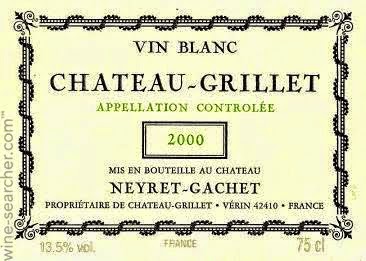
Château Grillet:
Rare Bliss Shared by Thomas Jefferson
By Don Merlot
[WritersClearinghouse News Service]
New Orleans
Château Grillet from the Rhone Valley in France is a fascinating white wine. Wine lovers may or may not ever taste this wine, because its availability is so scarce. In 1991 it attained its present size of 9.4 acres along the Rhone River, and it produces up to 10,000 bottles of wine a year. When it first became recognized as an elite wine it was one of three of the smallest foot prints of a premium French wine obtaining an appellation contrôlée status for the property. A few properties in Burgundy are smaller and have the AOC status: such as La Romanée Conti.
Coming south out of Vienne on the road into Rhone’s Northern section, the highly prized Rhone wine names pop out like a constellation in the sky: Côte Rôtie, Condrieu Château Grillet, and St. Joseph. The red wines come from the varietal Syrah and the white wines from Condrieu, and Château Grillet are white wines that come from the Viognier grape. In the 19th century as it wafted its great heights of the great white wines of the world, this wine had become among an elite white wines: It enjoys a lofty status and was found in the cellars of kings and the European wine consuming aristocracy. The name “Grillet” may refer to hillsides “grilled,” or burnt by the sun.
Subscribe to:
Posts (Atom)
.jpg)